
Distracted Driving Accident Claims in California
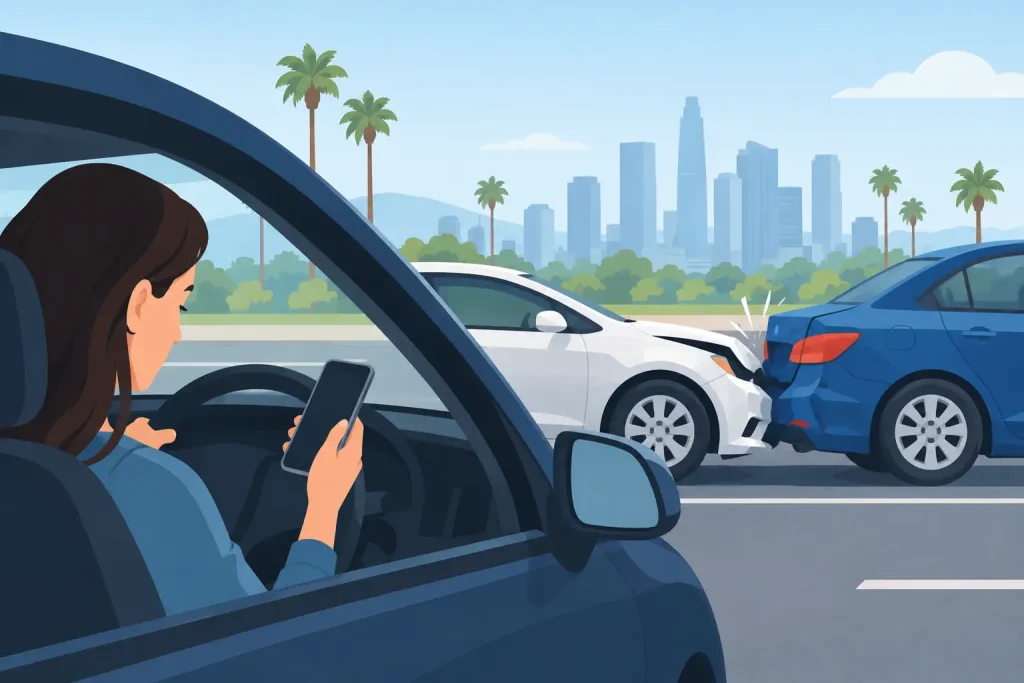
A driver looks down for a few seconds to read a text, change a playlist, check directions, or answer a call. At highway speed, those seconds can cover the length of a football field. When that choice causes a collision, distracted driving accident claims can help injured Californians pursue the compensation they need to recover and move forward.
The hard part is that distraction is not always obvious at the crash scene. The other driver may deny using a phone, and an insurance company may look for any reason to shift blame to you. A strong claim requires timely action, careful evidence gathering, and a clear account of how the crash changed your life.
What Counts as Distracted Driving?
Distracted driving is more than texting behind the wheel. It includes any activity that takes a driver’s eyes, hands, or attention away from safely operating a vehicle. California law generally prohibits drivers from holding and using a handheld wireless telephone or electronic communication device while driving. But a driver can be distracted even when a specific traffic citation is never issued.
Common forms of distraction include texting, scrolling social media, entering an address into a navigation app, watching videos, eating, grooming, reaching for an item, adjusting a vehicle’s controls, or turning around to deal with a child or passenger. A commercial driver may also be distracted by dispatch communications, paperwork, or an in-cab device.
In a personal injury case, the central question is whether the driver failed to use reasonable care. Looking at a phone just before rear-ending a stopped vehicle, drifting across lanes while changing music, or missing a red light while focused on a screen may all support a finding of negligence.
Why Distracted Driving Accident Claims Can Be Difficult
Many collisions happen quickly, and physical evidence alone may not reveal why a driver failed to brake or veered into another lane. The at-fault driver may say the sun was in their eyes, traffic stopped suddenly, or you appeared from nowhere. Insurers often rely on those competing explanations to reduce or deny a claim.
Phone records can be valuable, but they do not necessarily show what a person was doing on the device. A call or data transmission near the time of the crash can be meaningful evidence, yet it must be evaluated alongside witness statements, vehicle damage, traffic camera footage, and the police report. In some cases, an attorney may need to seek records through the legal process before they are lost.
Distraction also does not eliminate the insurance company’s attempt to examine your conduct. They may argue that you were speeding, following too closely, or failed to avoid the impact. California’s pure comparative negligence rule means an injured person may still recover damages if they were partly at fault, but their recovery can be reduced by their percentage of responsibility. That is why clear evidence matters so much.
Evidence That Can Strengthen Your Claim
The most useful evidence is often collected early. After a crash, memories fade, surveillance footage may be recorded over, and vehicles can be repaired or destroyed. If you are physically able, take photographs of the vehicles, roadway, debris, skid marks, traffic signals, and visible injuries. Get the names and contact information of witnesses before leaving the scene.
A police report may identify whether an officer observed signs of distraction, received an admission from the driver, or issued a citation. It is not the final word on fault, but it can be an important piece of the larger picture.
Other evidence may include nearby business surveillance video, dashcam recordings, vehicle event data recorders, accident reconstruction analysis, and the at-fault driver’s phone or app-use records. Do not try to obtain another person’s private phone records yourself. An experienced attorney can determine whether those records are relevant and pursue them through appropriate legal channels.
Your own medical documentation is equally important. Emergency room records, follow-up visits, diagnostic imaging, physical therapy notes, prescriptions, and work restrictions help connect the crash to your injuries. Keep a simple written record of pain levels, missed activities, sleep problems, and the ways the injury affects your work or family responsibilities. These details can be hard to recall months later, but they may matter when evaluating the full impact of the collision.
What Compensation May Be Available?
A distracted driver should be held responsible for the harm their carelessness causes. Depending on the facts of the case, compensation may include medical bills, future treatment needs, lost income, reduced earning capacity, vehicle repair or replacement costs, and other out-of-pocket expenses.
California law can also allow recovery for pain, physical suffering, emotional distress, disfigurement, and loss of enjoyment of life. These losses do not come with a receipt, but they are real. A back injury that prevents you from lifting your child, a concussion that makes it difficult to work, or anxiety that makes driving feel unsafe can affect every part of daily life.
The value of a claim depends on the evidence, the severity and duration of the injuries, available insurance coverage, and the degree of fault. Be cautious when an insurer offers a quick settlement before you understand your diagnosis or treatment plan. Accepting a settlement generally ends your right to seek additional compensation later, even if your injuries prove more serious than expected.
Steps to Take After a Distracted Driving Crash
Your first priority is safety and medical care. Call 911 when there are injuries, significant damage, suspected intoxication, or a dangerous roadway condition. Even if you initially feel sore but believe you can manage, seek prompt medical evaluation. Adrenaline can mask symptoms, and delays in treatment may give an insurer room to question whether the crash caused your injuries.
Exchange insurance and contact information, but avoid arguing about fault at the scene. Do not apologize or make statements that can be taken out of context. If you believe the other driver was distracted, tell the responding officer what you observed, such as a phone in the driver’s hand, a driver looking down, or a statement they made after impact.
Report the accident to your insurer, but keep your explanation factual and brief. You are not required to give the other driver’s insurer a recorded statement immediately. Their adjuster is gathering information for the insurance company, not acting as your advocate.
It is also wise to avoid posting about the collision, injuries, or activities on social media while your claim is pending. Photos and casual comments can be misunderstood or used to challenge the seriousness of your condition.
California Deadlines Matter
In many California personal injury cases, the deadline to file a lawsuit is generally two years from the date of the injury. Different deadlines may apply when a government entity is involved, and a government claim can require action much sooner. There can also be exceptions depending on the circumstances.
Waiting can make a case harder to prove even before a legal deadline expires. Witnesses become difficult to locate, video is deleted, and the evidence needed to show phone distraction may disappear. Speaking with a lawyer early gives you a better chance to preserve the information that supports your claim.
Get a Clear Answer Before You Settle
After a serious crash, you should not have to face medical bills, missed work, and insurance pressure alone. The Law Offices of Emmanuel F. Fobi provides compassionate, results-driven representation for injured people in Oxnard, Bakersfield, and surrounding California communities. For qualifying injury matters, the firm works on a no-win, no-fee basis.
A distracted driver made a careless choice. Your next choice should be protecting your health, your evidence, and your right to be treated fairly. A prompt legal review can provide the clarity and support you need before an insurance company decides what your recovery is worth.