
Who Pays Ambulance Bills After a California Crash?
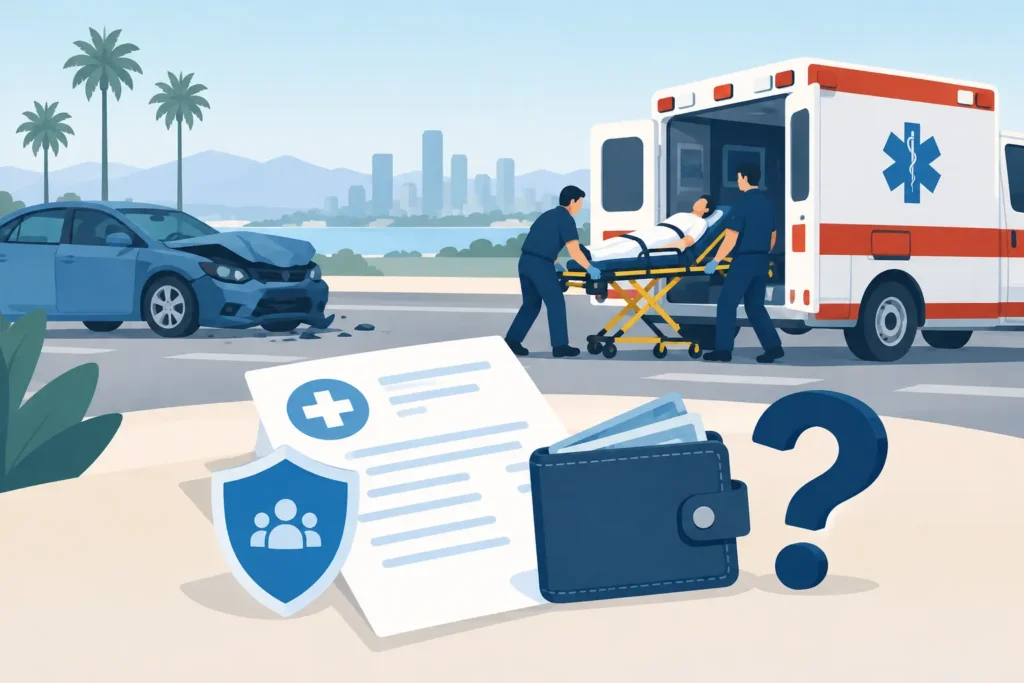
A serious crash leaves little time to think about paperwork. Paramedics arrive, someone calls 911, and the immediate priority is getting medical help. Then the ambulance bill arrives. Many injured people understandably ask: who pays ambulance bills after a California accident? The answer depends on your insurance coverage, the facts of the crash, and whether another person was legally at fault.
You should never refuse emergency care because you are worried about a bill. But you should also understand how that bill may be paid and what steps can protect your right to recover the full value of your injury claim.
Who Pays Ambulance Bills After an Accident?
In many cases, the ambulance provider bills the injured patient first. That does not necessarily mean you are ultimately responsible for the entire cost. It means the provider needs a source of payment while insurance companies and attorneys sort out liability.
Your health insurance may pay all or part of the bill, subject to your deductible, copay, coinsurance, and plan rules. If you have automobile Medical Payments Coverage, often called MedPay, that coverage may help pay reasonable medical costs from an accident regardless of who caused it. Medicare or Medi-Cal may also cover eligible ambulance services under applicable rules.
If another driver caused the crash, that driver’s liability insurance may ultimately be responsible for your ambulance charges as part of your personal injury claim. However, the at-fault insurer usually does not pay every bill immediately. It may wait until the claim is investigated and resolved. That delay is why health insurance and MedPay can be so important after a collision.
The At-Fault Driver May Owe Compensation
California follows a fault-based system for car accidents. When another driver’s careless conduct caused your injuries, you can seek compensation from that driver and their insurer. Ambulance transportation is often one of the first medical expenses included in a claim.
A successful injury claim can seek payment for more than the ambulance ride. Depending on the facts, it may include emergency treatment, hospital care, follow-up appointments, physical therapy, medication, lost income, pain and suffering, and other accident-related losses.
Still, fault must be proven. The other insurer may argue that its driver was not responsible, that you share blame for the collision, or that the ambulance transport was not medically necessary. California’s comparative negligence rule can reduce a recovery if an injured person is found partially at fault. For example, if your damages total $50,000 but you are found 20% responsible, your recovery may be reduced by 20%.
That is why a bill should not be viewed in isolation. The ambulance charge is evidence of the medical care you needed after the crash, but it is also one part of a larger claim for fair compensation.
Health Insurance, MedPay, and Uninsured Drivers
The source that pays first can make a real difference in your financial stress after an accident.
Health Insurance
Health insurance can provide the fastest route to getting an ambulance bill addressed. Submit the bill promptly, keep a copy for your records, and review the Explanation of Benefits from your insurer. Do not assume that an amount shown on a bill is final before your insurer processes it.
Your health insurer may later seek reimbursement from an injury settlement in some situations. This is commonly called subrogation or a reimbursement claim. The amount it can recover, and whether it must reduce its claim, can depend on the type of health plan and the circumstances of the case. An attorney can review those demands before settlement funds are distributed.
Medical Payments Coverage
MedPay is optional auto insurance coverage that can help with medical expenses for you and your passengers, often without waiting to determine fault. It may apply to ambulance transportation, though coverage limits and policy language matter.
MedPay can be especially helpful when you have a high health insurance deductible or no immediate access to other coverage. Check your own auto policy, even if someone else caused the collision. You may have benefits available that you have not used.
Uninsured or Underinsured Motorist Coverage
If the at-fault driver has no insurance or too little insurance, uninsured or underinsured motorist coverage may be critical. This coverage is part of your own auto policy and may help compensate you for accident-related injuries when the responsible driver cannot fully pay.
These claims can be complicated. Your own insurer may still question fault, medical treatment, or the value of your damages. You deserve to know what coverage is available and what your claim is truly worth before accepting a quick payment.
What If You Were a Passenger?
Passengers are often in a stronger position on the question of fault because they generally did not cause the accident. The responsible driver could be the driver of the vehicle you were riding in, another driver, or more than one party.
As a passenger, you may have several possible sources of coverage: the driver’s MedPay coverage, your own health insurance, your own MedPay coverage, or a claim against the at-fault driver’s liability insurance. The details matter, particularly when multiple people were injured and the available insurance limits are limited.
Do not let an insurer tell you there is only one path to payment without examining all available policies.
What to Do When the Ambulance Bill Arrives
Do not ignore the bill, even if you believe another driver should pay it. Unpaid medical accounts can create unnecessary pressure and may be sent to collections. Taking a few prompt steps can help you stay organized and protect your claim.
- Keep the original ambulance bill, proof of payment, and every insurance notice you receive.
- Give the provider your health insurance and auto insurance information, if applicable.
- Ask the ambulance company whether it can place the account on hold while an insurance claim is pending.
- Request an itemized statement if the charges are unclear or appear inaccurate.
- Avoid signing broad settlement releases or accepting a fast insurer offer before you know the full extent of your injuries and expenses.
Continue following medical advice as well. Gaps in treatment can harm your health and give an insurance company an argument that your injuries were not serious or were unrelated to the accident.
Can an Ambulance Bill Be Reduced?
Sometimes, yes. A bill may be reduced through health insurance adjustments, provider negotiations, or a resolution of a reimbursement claim after a settlement. The outcome depends on the provider, the insurance coverage, the total settlement, and the legal rules governing the claim.
Be careful about trying to negotiate a bill without understanding the bigger picture. A lower bill can be helpful, but it should not come at the expense of a fair injury settlement. Likewise, paying a bill out of pocket does not erase your right to seek reimbursement from the party who caused the accident. Save receipts and documentation of every payment.
When Legal Help Can Make a Difference
Ambulance bills are often only the first financial problem after a crash. Emergency room charges, imaging, missed paychecks, car repairs, and ongoing treatment can quickly follow. Insurance adjusters handle claims every day. You should not have to face them alone while recovering from an injury.
The Law Offices of Emmanuel F. Fobi helps injured people in Oxnard, Bakersfield, and surrounding California communities understand their options, identify available coverage, and fight for the compensation they deserve. For qualifying personal injury matters, clients pay no attorney’s fee unless there is a recovery.
If you have received an ambulance bill after a collision, keep the paperwork, get the medical care you need, and seek clear advice before making decisions that could affect your recovery.