
Car Accident Damage Categories Explained
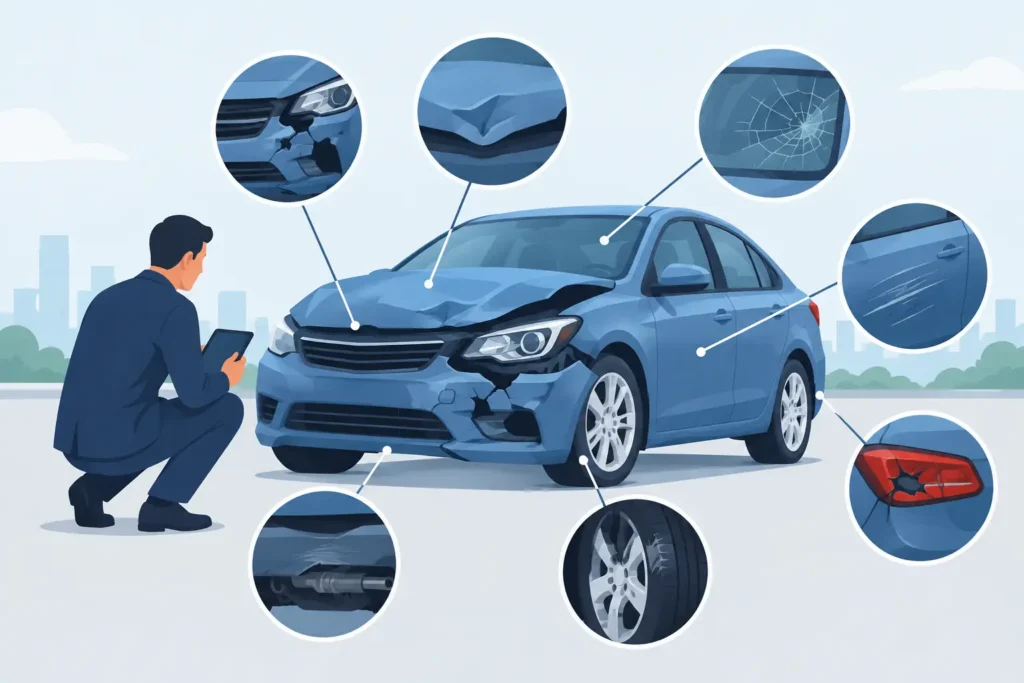
A crash can leave you with far more than a damaged bumper. Medical bills may arrive before repairs are approved, work can become impossible, and an insurer may push for a quick settlement. Understanding car accident damage categories helps you see the full scope of your losses and avoid accepting less than your claim may be worth.
For California drivers in Oxnard, Bakersfield, and surrounding communities, the labels used by body shops and insurance companies can be confusing. Some describe the condition of the vehicle. Others describe the types of compensation available after someone else caused the collision. Both matter.
Vehicle Car Accident Damage Categories
Insurance adjusters and repair facilities commonly sort vehicle damage by its severity and location. These classifications help estimate repairs, determine whether a vehicle is safe to drive, and decide whether it may be declared a total loss. They do not, by themselves, determine the value of your injury claim.
Cosmetic or minor damage
Cosmetic damage generally includes scratches, paint transfer, small dents, cracked trim, and light bumper damage. A car may still be drivable, but that does not mean the crash was insignificant. Modern bumpers often contain sensors, cameras, brackets, and safety components hidden behind the visible surface. What looks like a small scrape can require more extensive repair once the bumper is removed.
More importantly, a minor-looking vehicle impact can still cause a real injury. Neck, back, shoulder, and concussion symptoms may not appear fully until hours or days after a collision. Never let an insurer use limited property damage as a reason to dismiss pain that a medical professional has documented.
Moderate damage
Moderate damage may involve damaged doors, fenders, lights, wheels, suspension parts, or deployed airbags. The vehicle might need towing or may be unsafe to operate until it is repaired. Repair costs can rise quickly because shops must inspect for hidden damage and recalibrate electronic safety systems after replacing certain parts.
This category often appears in side-impact and rear-end collisions. It can also involve injuries that interfere with everyday life, including soft-tissue injuries, fractures, and worsening of a preexisting condition. California law allows an injured person to seek compensation for harm caused or aggravated by the accident, even when they had a medical condition before the crash.
Severe structural damage
Severe damage can affect a vehicle’s frame, unibody, roof, floor pan, engine compartment, or multiple safety systems. These vehicles may be undrivable and require substantial repair work, if repair is appropriate at all. A vehicle that does not look crushed can still have structural damage, particularly after a high-speed impact or collision at an angle.
A serious crash often creates a stronger need for prompt legal guidance. Evidence can disappear quickly, memories fade, and insurance companies may begin building their defense immediately. Photos, police reports, witness information, vehicle data, and medical records can all become important.
Total loss damage
A vehicle is generally considered a total loss when the cost to repair it, along with related costs, reaches the threshold set by the insurer under applicable California rules and policy terms. This does not always mean the vehicle is beyond repair. It means repairing it may not make financial sense compared with its actual cash value.
The total-loss payment may be a separate issue from your personal injury claim. If another driver was responsible, you may still have the right to pursue medical expenses, lost income, and other accident-related losses. Do not assume that signing paperwork for your vehicle payment resolves every claim. Read every release carefully.
Legal Damage Categories After a California Crash
The word “damages” also has a legal meaning. It refers to the losses for which an injured person may seek compensation from the at-fault driver or another responsible party. The facts of each case determine what may be available.
Economic damages
Economic damages are the financial losses that can be documented with bills, receipts, wage records, and expert opinions. They may include emergency treatment, doctor visits, hospital care, medication, physical therapy, diagnostic testing, and future medical needs.
They can also include lost wages and reduced earning ability. If you missed work because of appointments, recovery, surgery, or physical limitations, keep records of missed time and pay. Self-employed workers should preserve invoices, tax documents, canceled jobs, and other proof showing how the injury affected their income.
Property-related losses may also fall within this category. Depending on the circumstances, that can include vehicle repair or replacement value, towing, storage, rental transportation, and damaged personal items inside the vehicle.
Non-economic damages
Non-economic damages address losses that do not come with a simple invoice. Pain, physical discomfort, emotional distress, anxiety, sleep disruption, scarring, disability, and loss of enjoyment of life may all be part of an injury claim.
These losses are personal, but they still require evidence. Consistent medical treatment, honest descriptions of symptoms, photographs, treatment notes, and testimony from people who have seen how the injury changed your life can help establish the impact. Avoid exaggerating, but do not minimize what you are going through just because you are trying to stay strong.
Punitive damages
Punitive damages are different. They are intended to punish particularly wrongful conduct rather than compensate a person for ordinary losses. They are not available in most car accident cases. In California, they may be considered only when the evidence shows conduct such as malice, oppression, or fraud, which is a high standard.
For example, ordinary negligence behind the wheel is usually not enough. A case involving extreme reckless conduct may require a closer legal review. It is wise to focus first on preserving evidence and documenting your actual losses rather than assuming punitive damages will apply.
Why the Categories Can Affect Your Claim
Damage categories provide context, but they are not a formula for settlement value. Two people can be involved in similar-looking crashes and have very different outcomes. One may recover quickly, while another may need months of treatment. Liability may be clear in one case and disputed in another. Available insurance coverage can also affect the practical path to recovery.
Insurance companies may review photographs of the vehicles and argue that a low-impact collision could not have caused significant injury. That position overlooks a basic reality: human bodies do not respond to collisions the same way vehicles do. Age, seating position, prior health, the direction of impact, and whether the person braced for the crash can all affect injuries.
At the same time, serious visible vehicle damage does not automatically prove every medical condition was caused by the collision. Strong claims are built with credible evidence, timely care, and a clear connection between the accident and the losses claimed.
Steps to Take After You Identify Damage
After a crash, get medical attention if you are hurt or feel symptoms developing. Report the collision when required, obtain the other driver’s information, take photos of vehicles and the scene if it is safe, and preserve all documents related to treatment, repairs, and missed work.
Be cautious when speaking with an insurance adjuster. You can provide basic facts, but you do not need to guess about injuries, accept blame, or agree to a recorded statement before you understand your rights. A quick offer may not account for future treatment or the full effect of the injury.
The Law Offices of Emmanuel F. Fobi helps injured Californians assess the real losses behind a crash, not just the visible damage. With experienced, personal advocacy, you can pursue the compensation you need while focusing on your recovery.
Your vehicle can be repaired or replaced. Your health, financial stability, and peace of mind deserve the same serious attention. If a collision has disrupted your life, preserve the evidence, listen to your medical providers, and seek clear legal advice before making a final decision about your claim.